Health to Rails: Mobile Medical Care
This project addressed health challenges in Appalachia linked to the coal mining industry. Research and mapping revealed a need for accessible healthcare, leading to a proposal that repurposes abandoned rail lines as nodes for a mobile medical train. The sites promote mental and physical wellbeing, while the trains provide essential healthcare services.
Regional Project | Fall 2024 | Professor: Faye Nixon
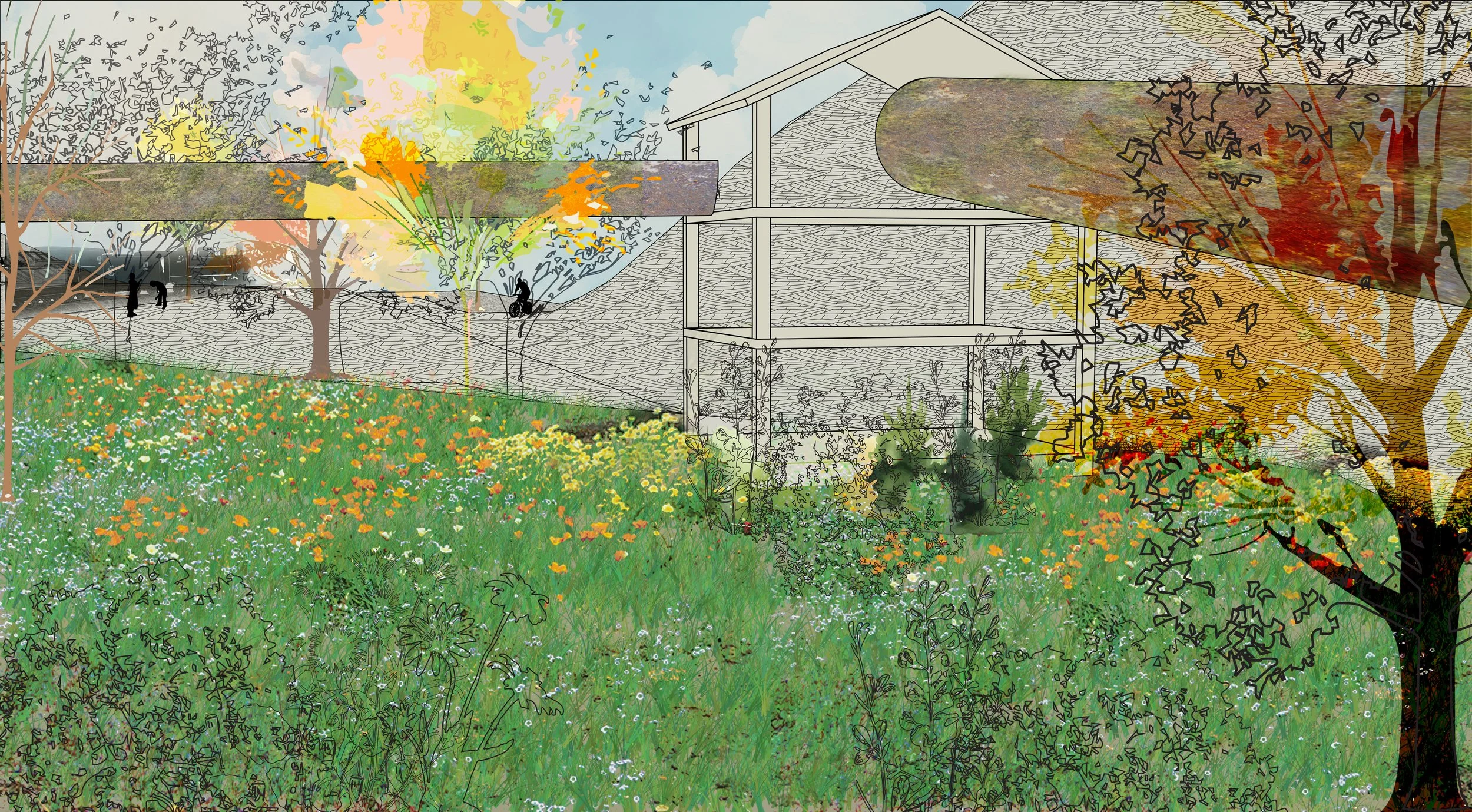
Perspective I
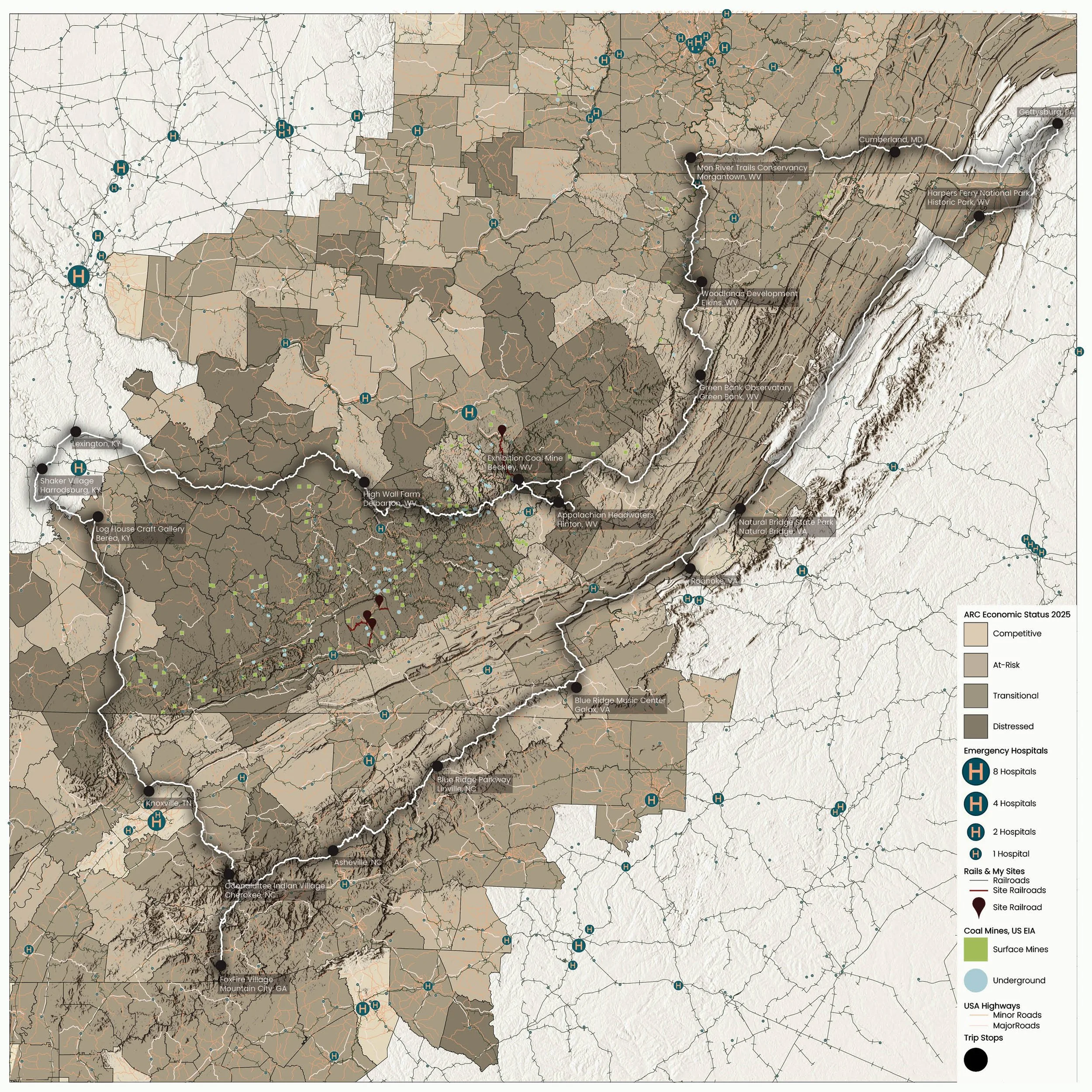
Trip Route
From Knoxville to Log House Craft Gallery, we learned about the Appalachian regions challenges and potentials.
Health to Rails begins with a 7 day road trip across the Appalachian mountains alongside my cohort and professor Faye Nixon.
-
![]()
Foxfire Village (C: Faye Nixon)
-
![Blue Ridge Parkway]()
Blue Ridge Parkway (C: Faye Nixon)
-
![]()
Natural Bridge State Park
-
![]()
Mon River Trail Conservancy
-
![]()
Green Bank Observatory (C: Faye Nixon)
-
![]()
Appalachian Headwaters (C: Faye Nixon)
-
![]()
Exhibition Coal Mine (C: Faye Nixon)
-
![]()
High Wall Farm (C: Faye Nixon)
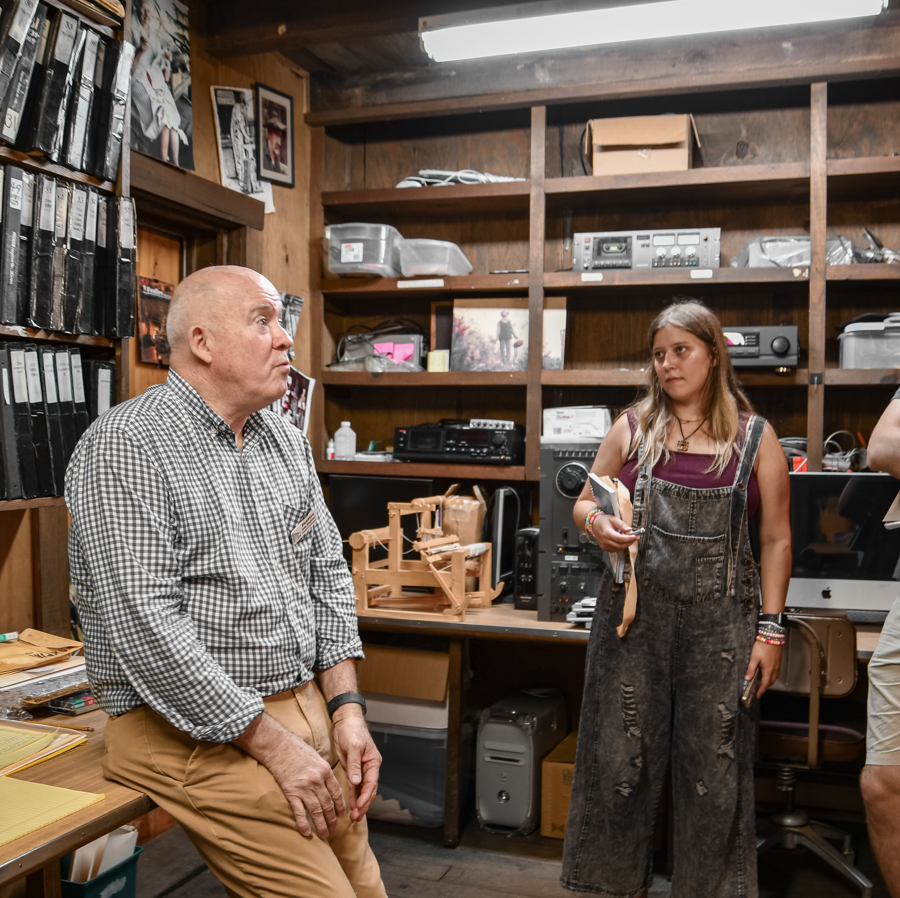
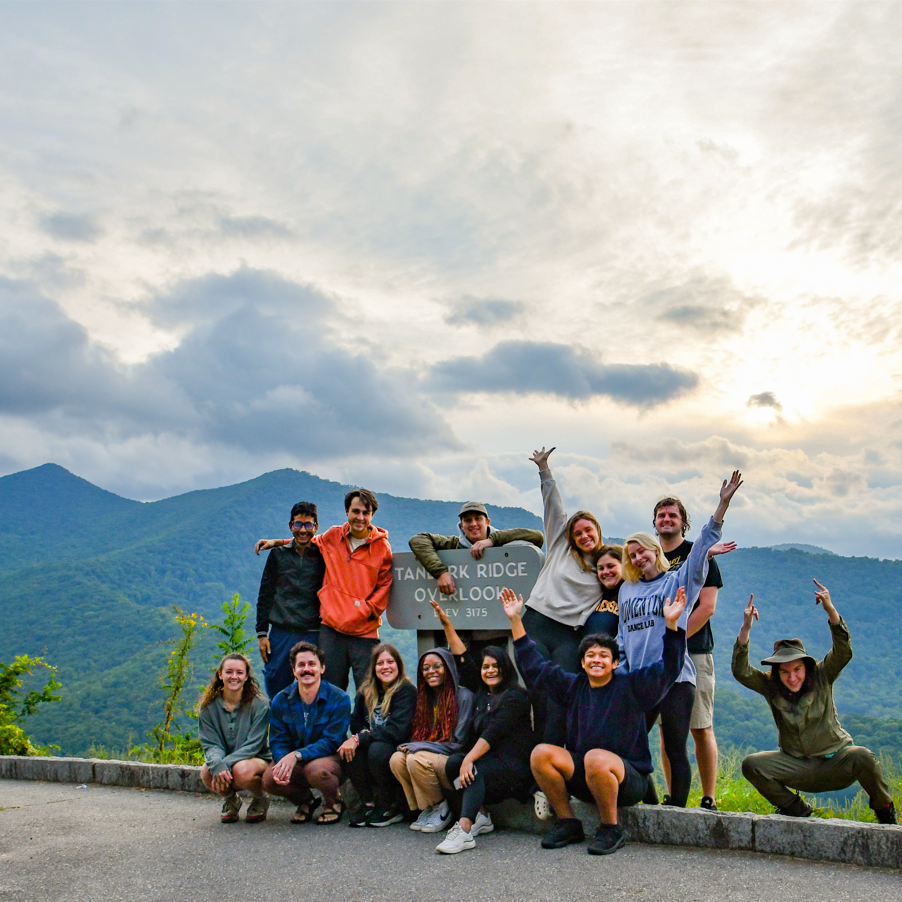
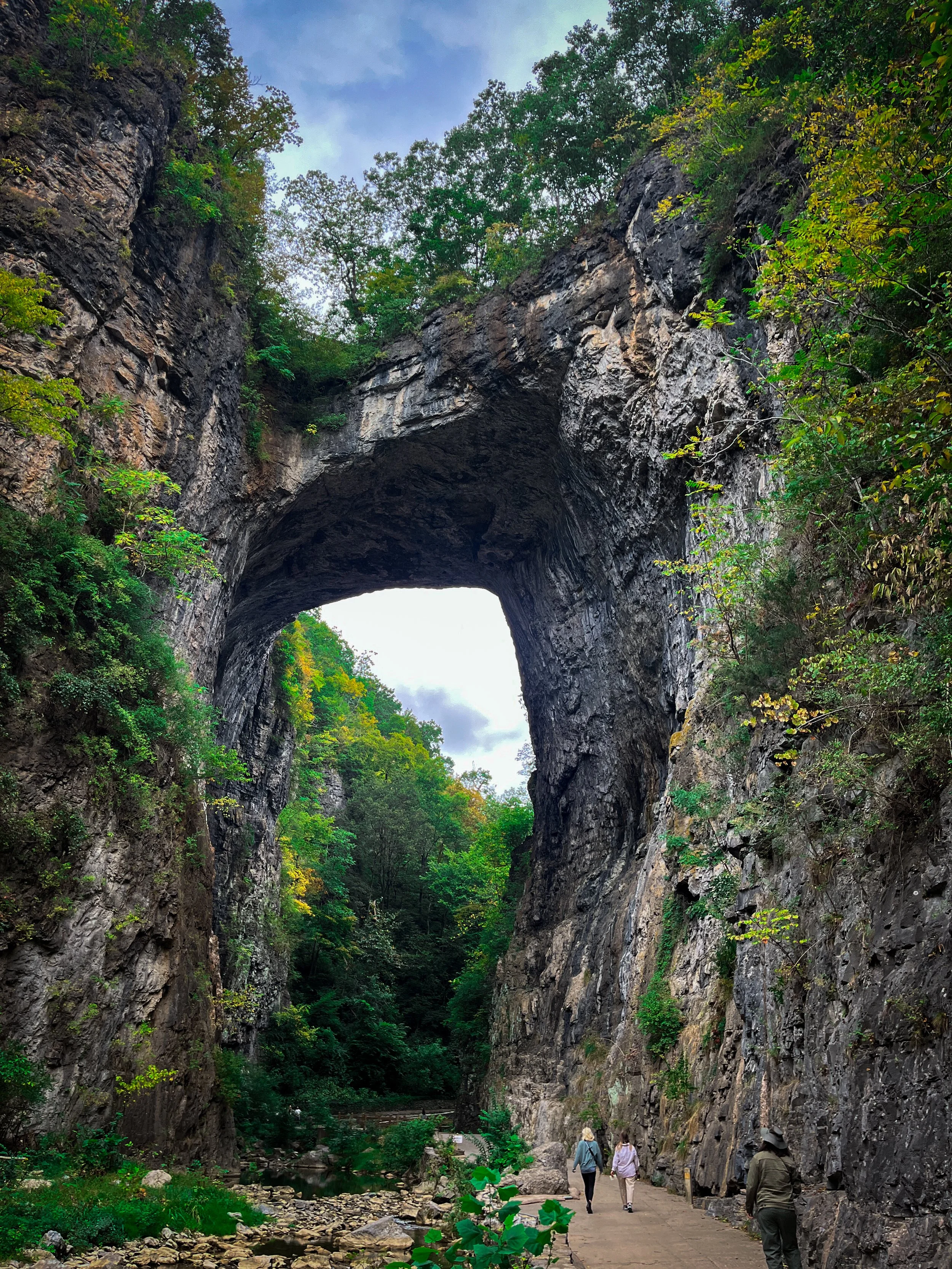
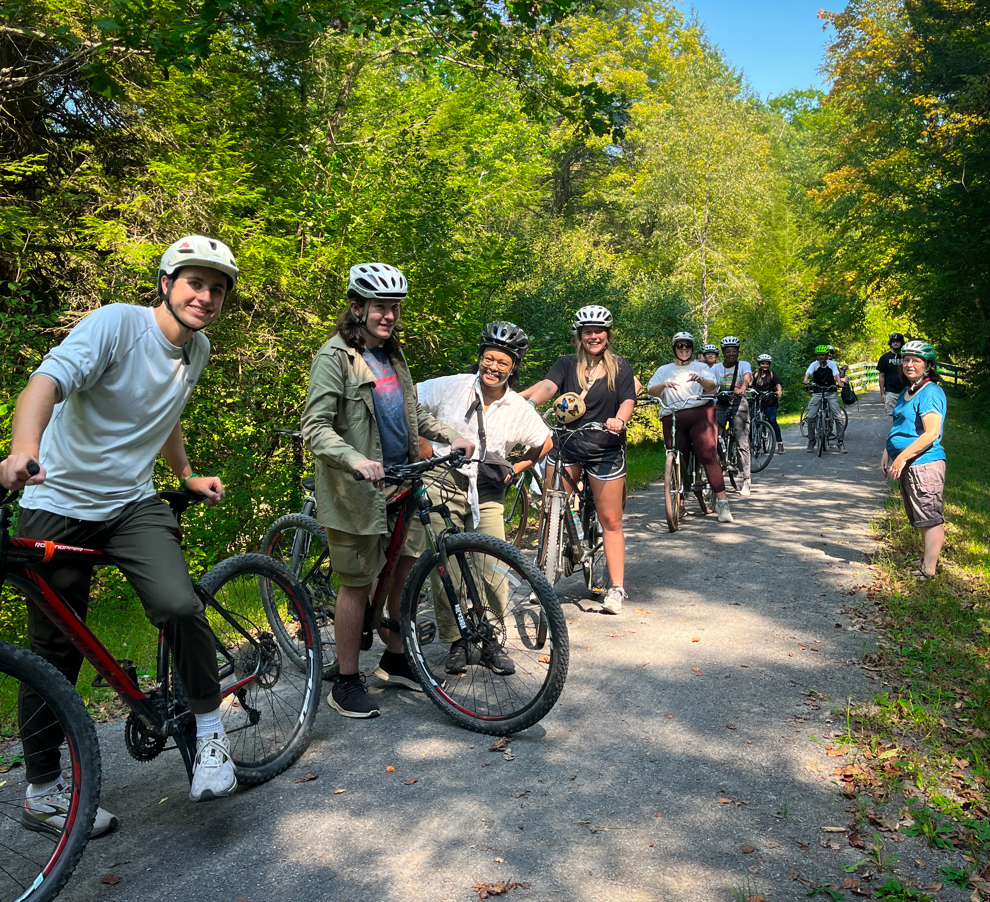
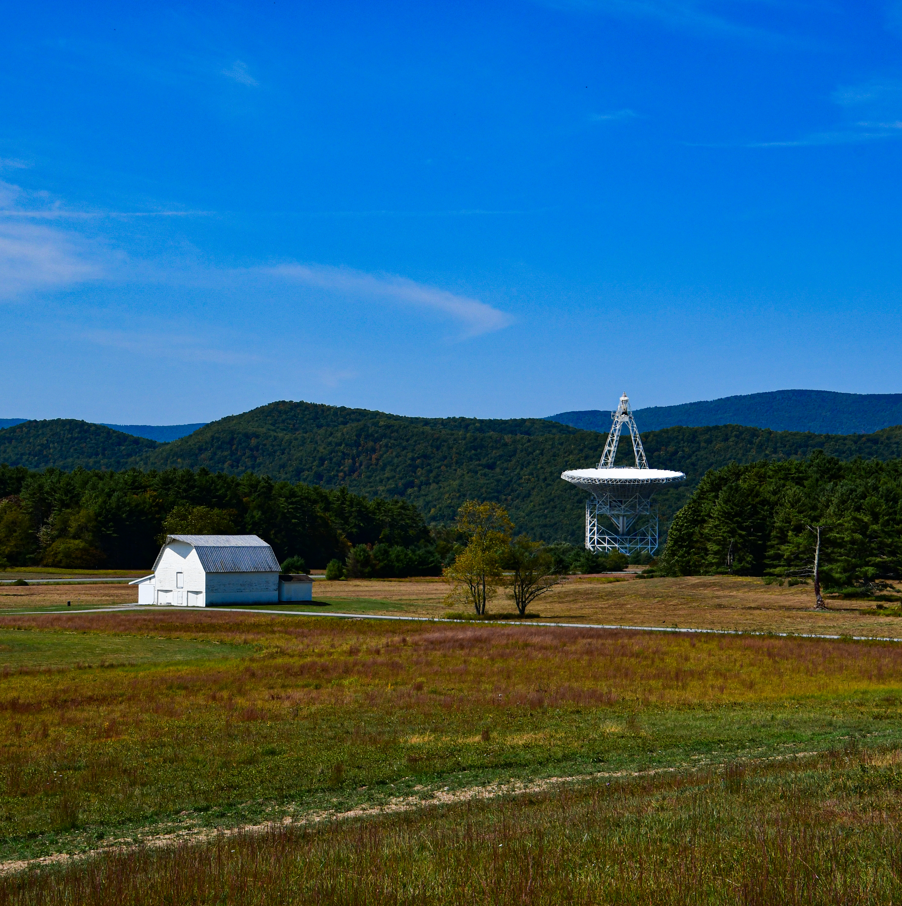
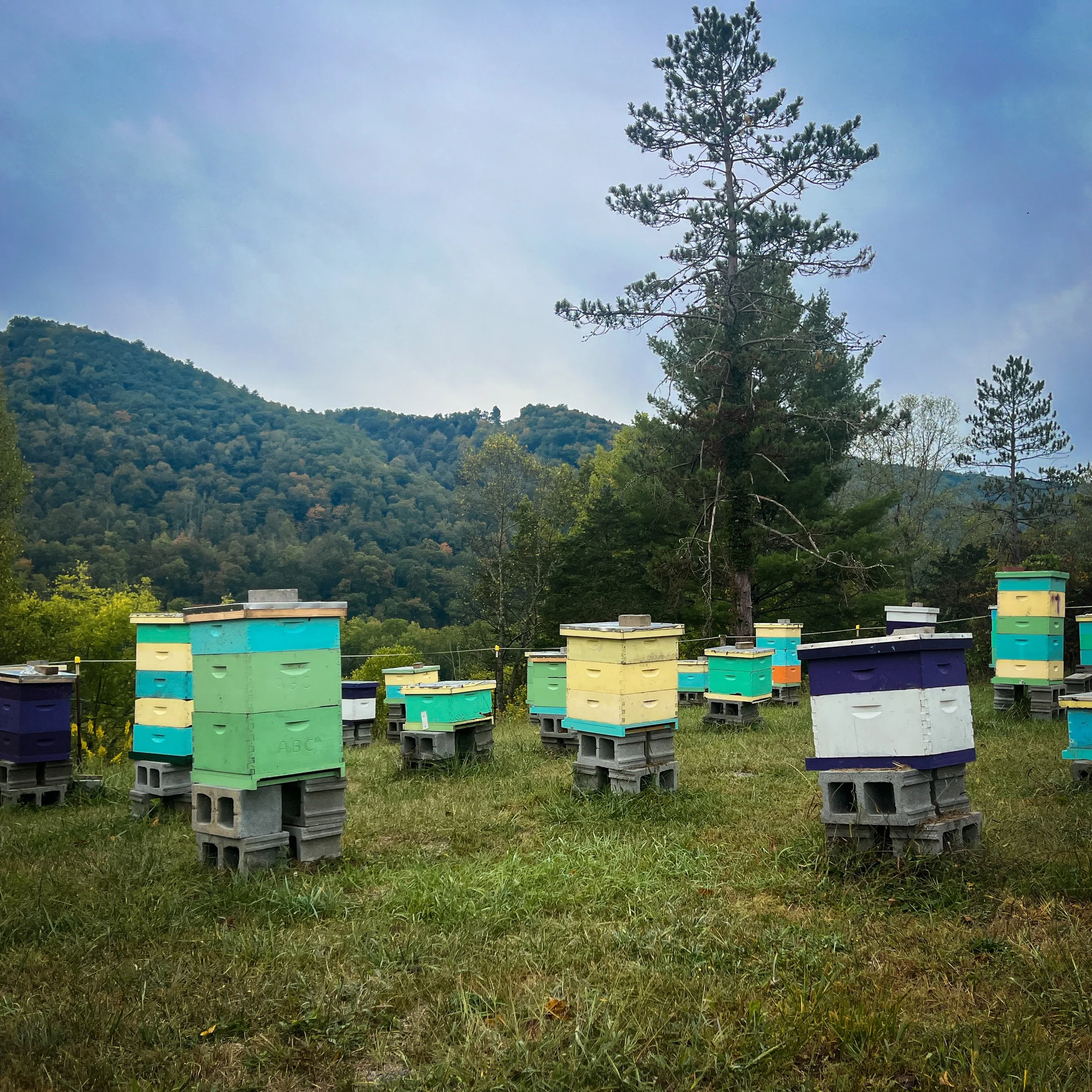
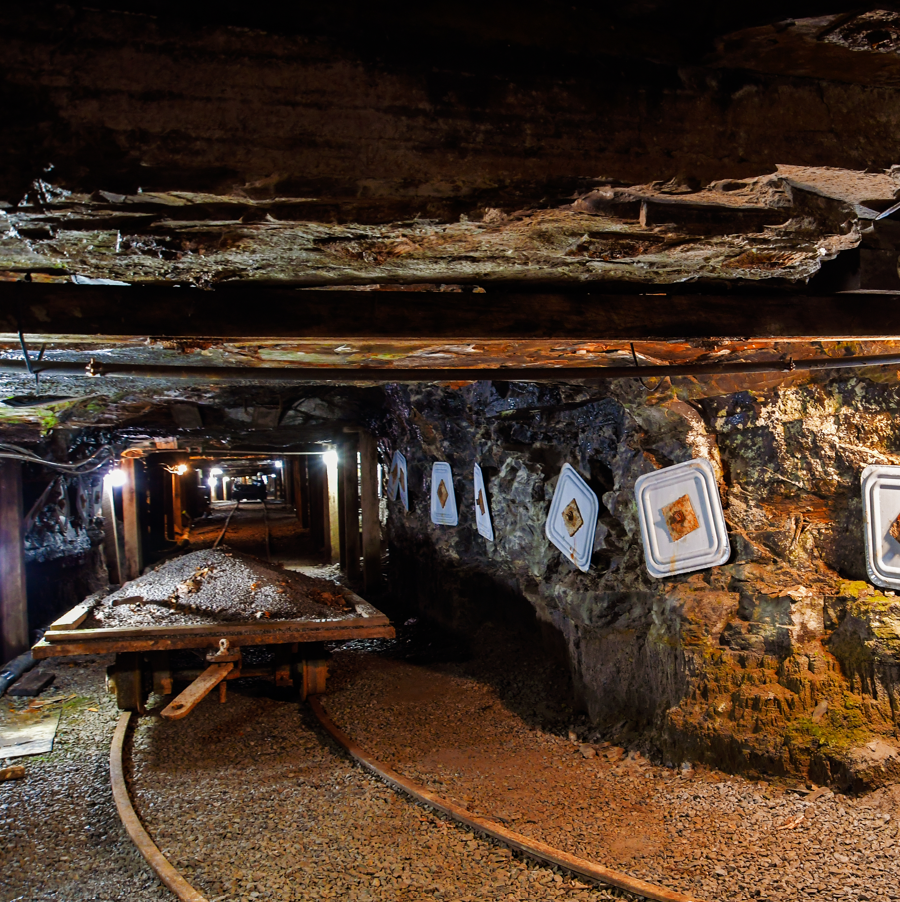
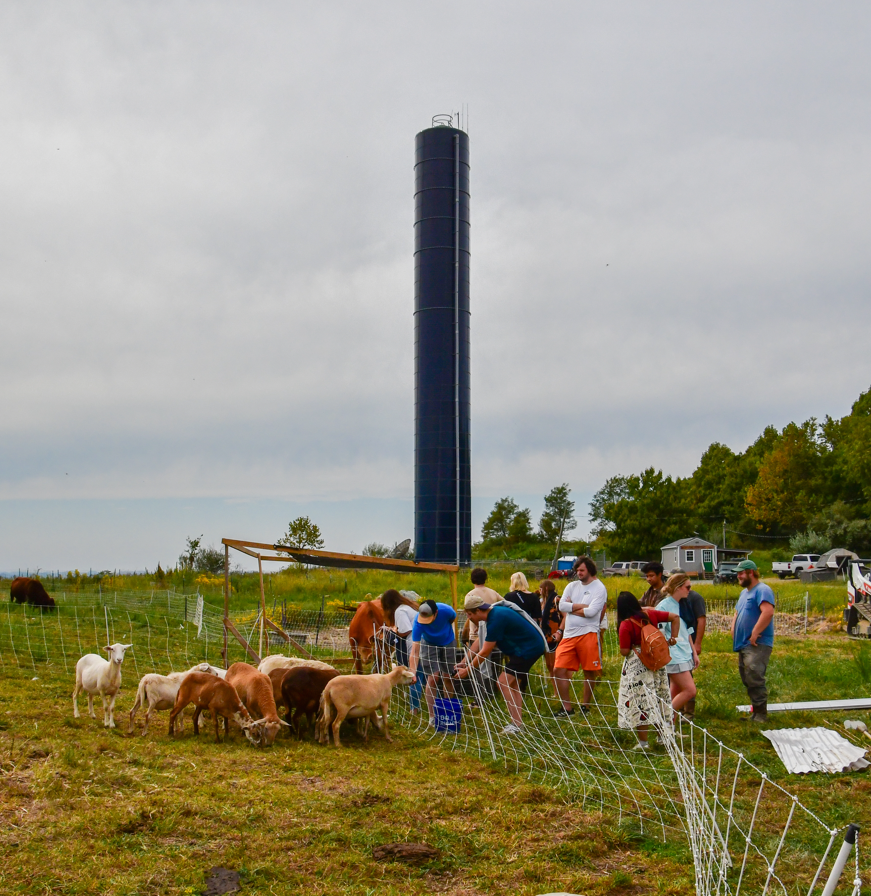
Each student was assigned a topic to research in order to create an audio log. My audio log laid the ground work for mapping the connection between impoverished areas and healthcare concerns throughout the region. The framework for Health to Rails was developed off of the link between health and economic status within counties that have limited access to healthcare.
Coal mining has long shaped central Appalachia, offering high wages but bringing significant health risks such as COPD, black lung, heart disease, and poor mental and physical wellbeing. Healthcare access remains limited, with fewer facilities, long travel distances, and many residents lacking insurance or transportation. At the same time, the region holds extensive abandoned rail infrastructure that once moved coal across great distances.
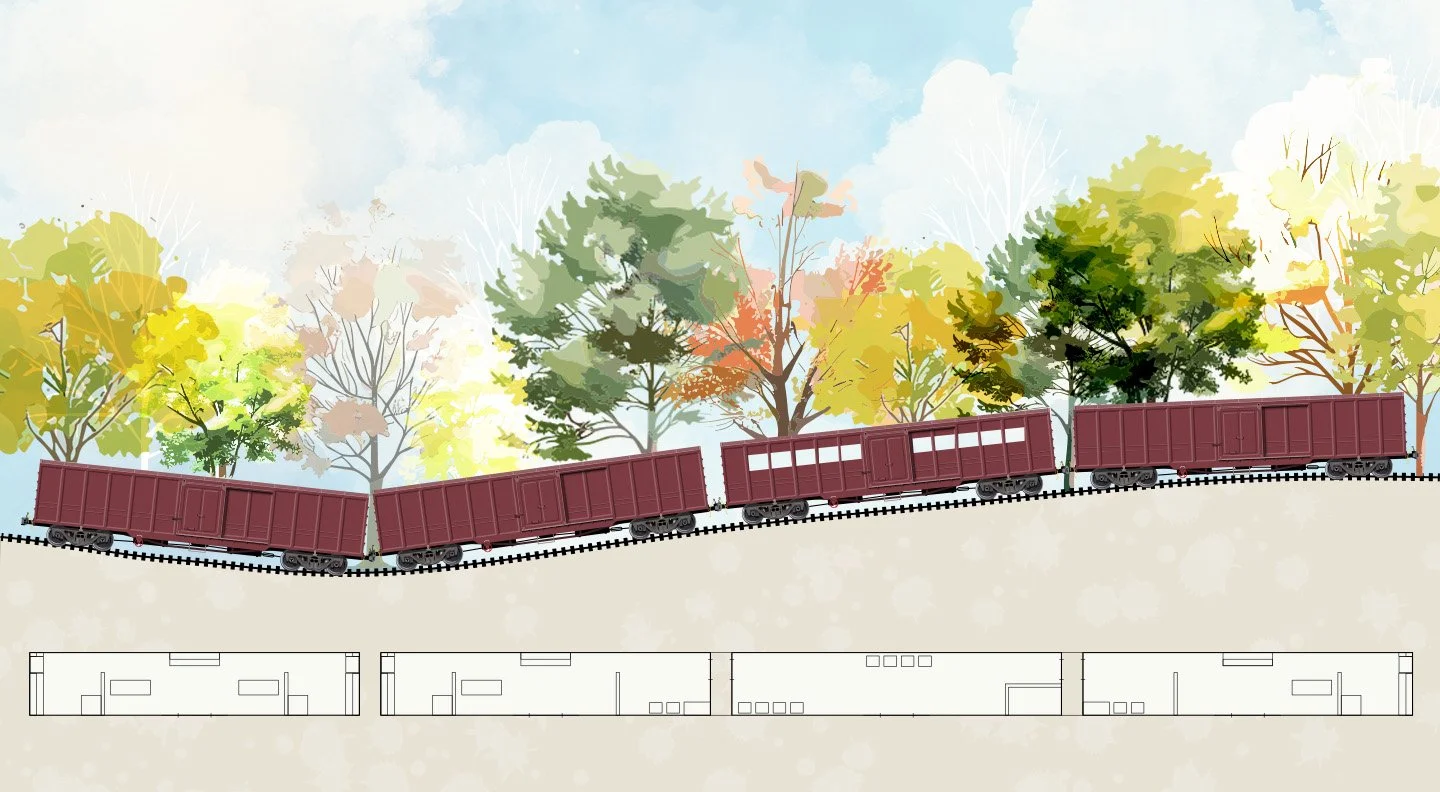
Section I - Medical Train Layouts
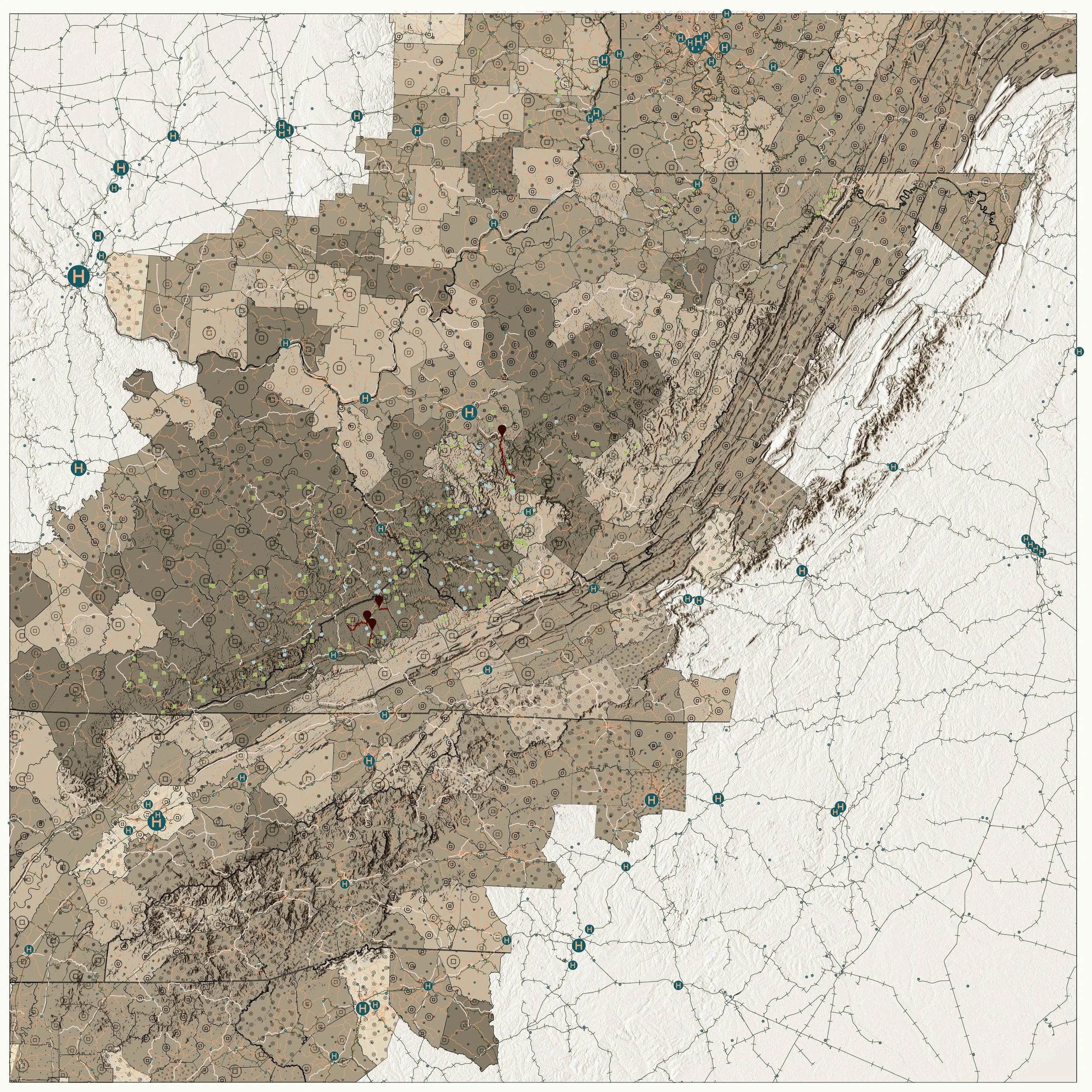
Heart and Lung Disease Rates in Comparison to the 2025 ARC Economic Status
Darker Color = Higher Risk for Economic Status, Larger Symbols = Higher Rates of Heart and Lung Disease
This project proposes repurposing these rail lines into a network of nodes where a healthcare train can stop and deliver medical services directly to rural Appalachian communities. Through mapping and research, three sites were established in relation to a nearby hospital
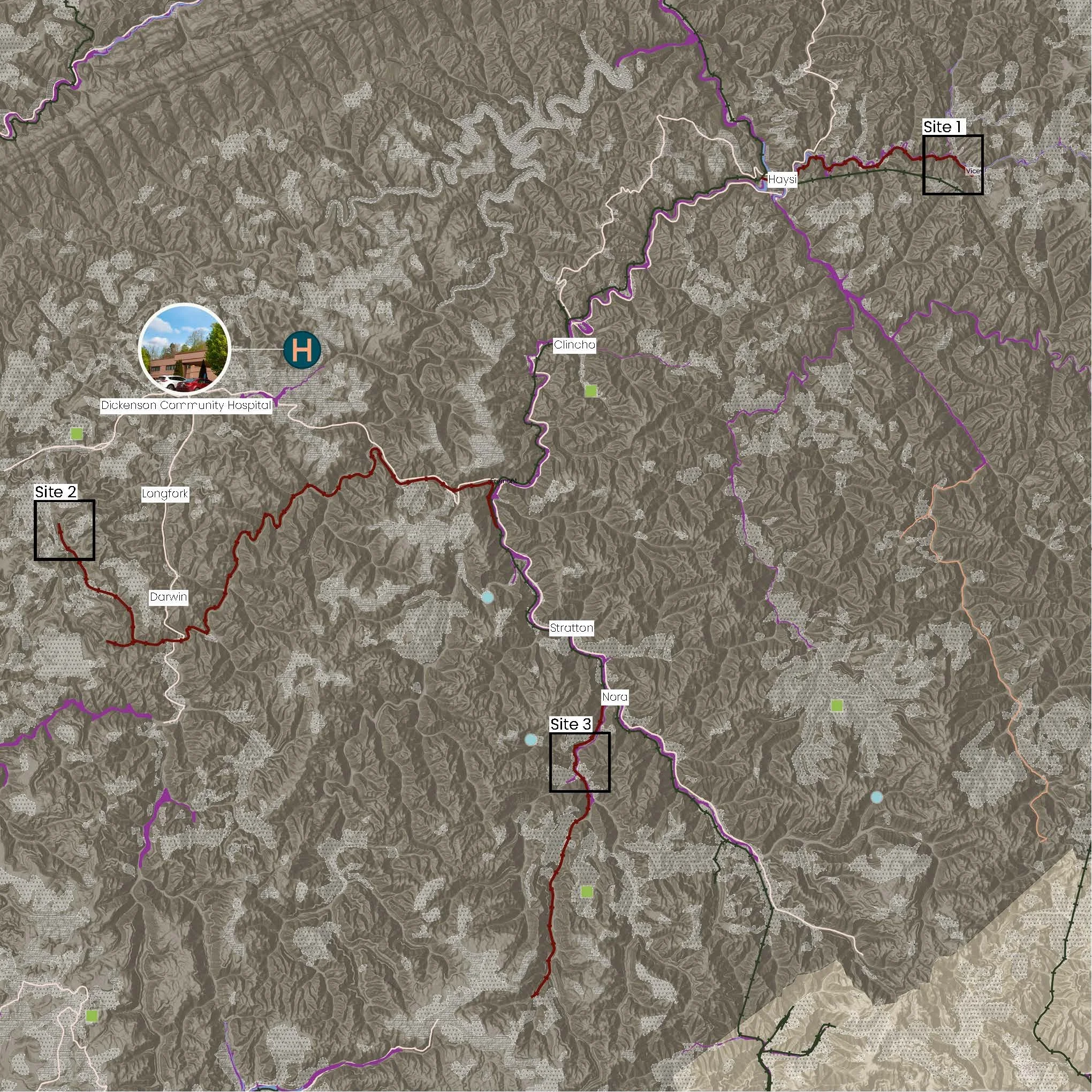
Context Map
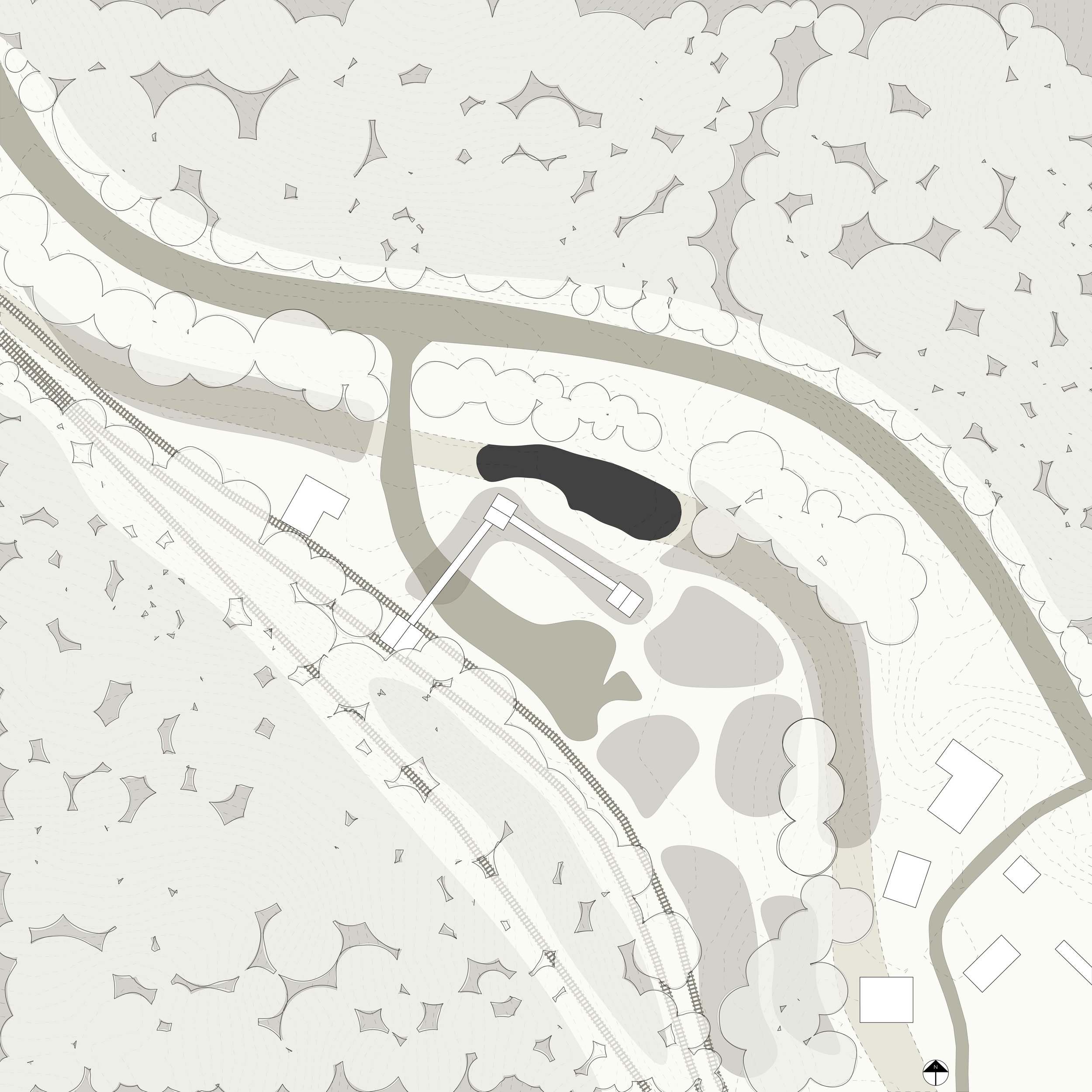
Site 1 - Buchanan County, Virginia
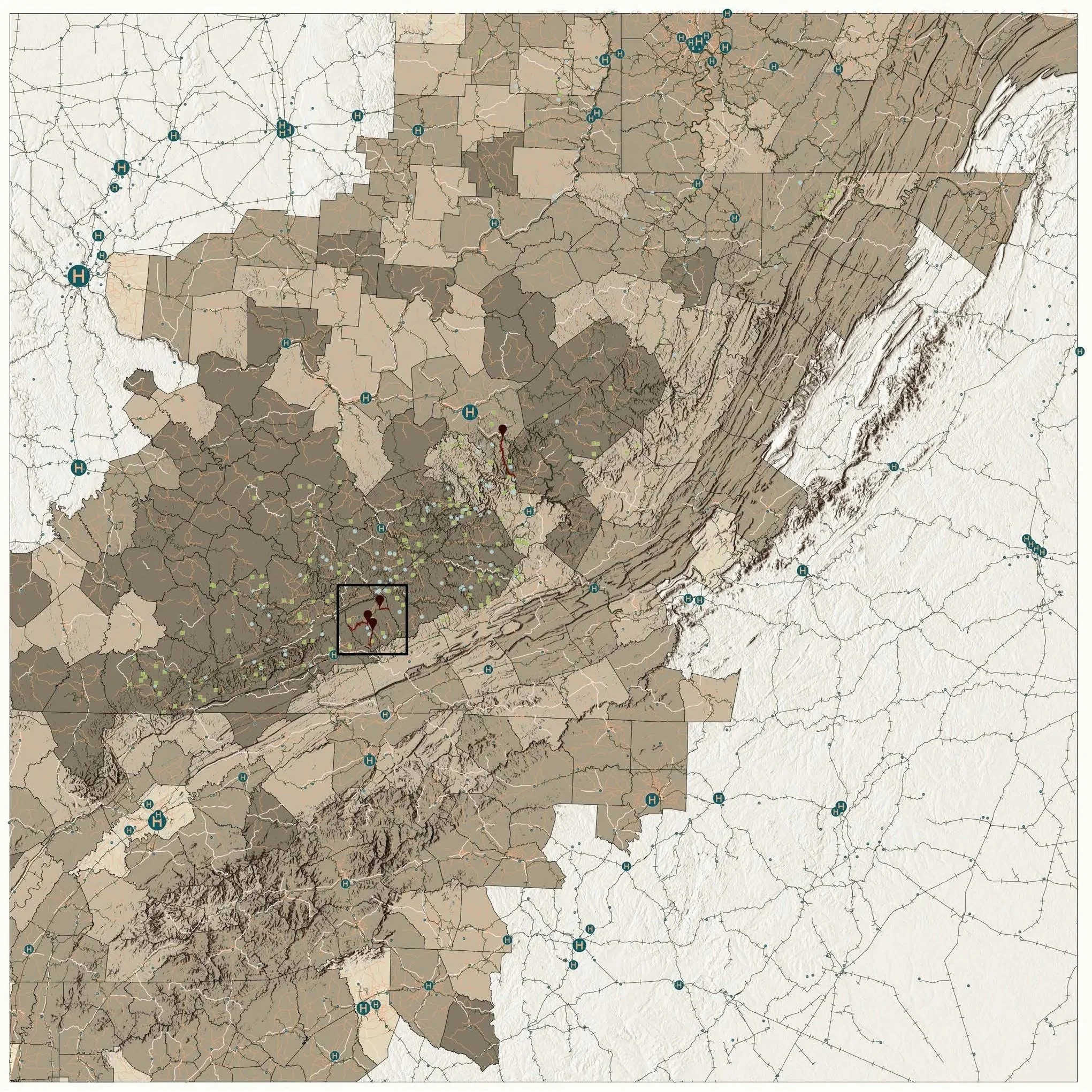
Regional Map
The design is guided by themes of restoration, connection, healing, flexibility, and locality. Japanese moss gardens inspire a grounding atmosphere, rail trails suggest new links between urban and rural areas, sensory gardens support physical and mental wellbeing, adaptable spaces encourage use beyond the health trail, and a focus on local needs ensures the site serves its surrounding community.
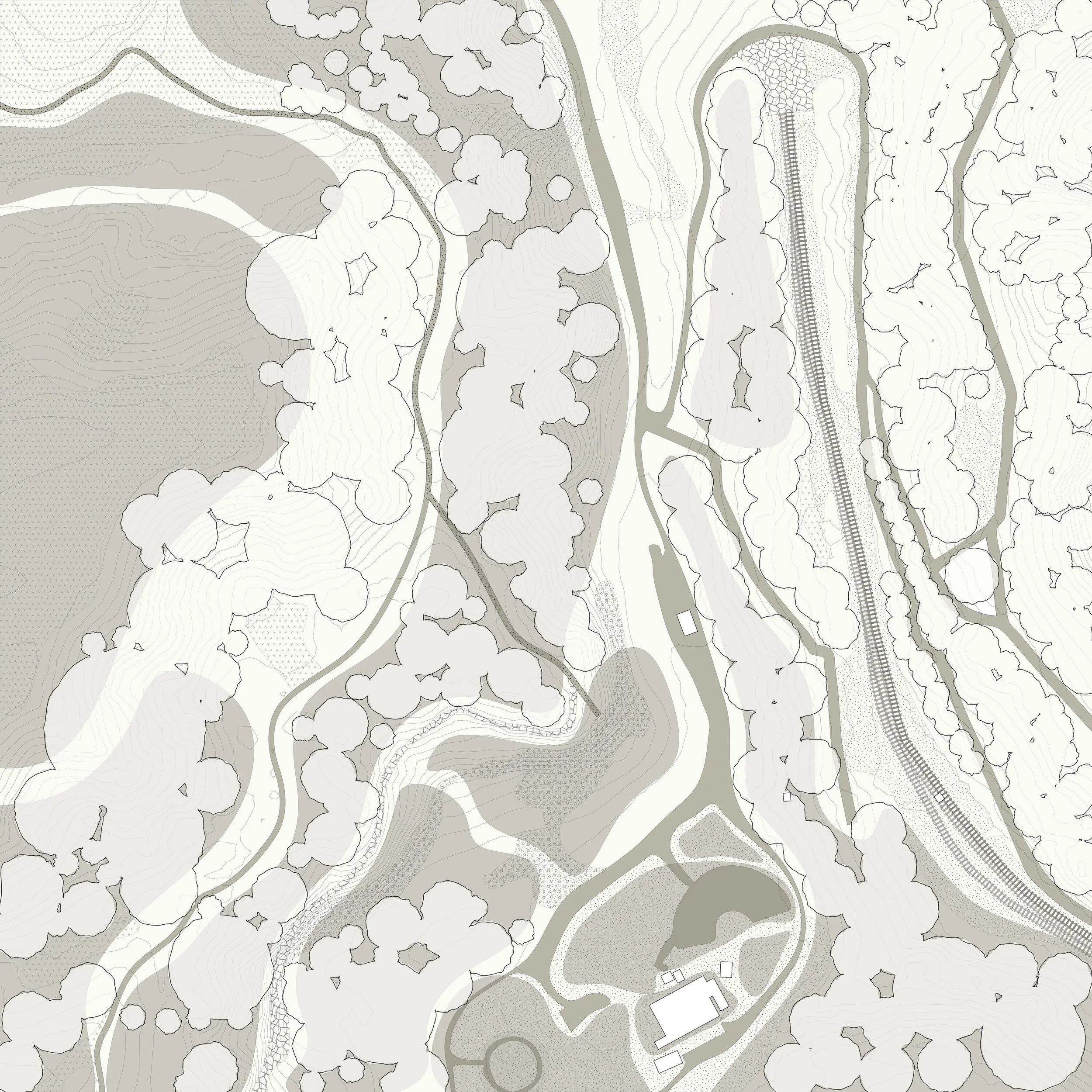
Site 2 - Dickenson County, Virginia
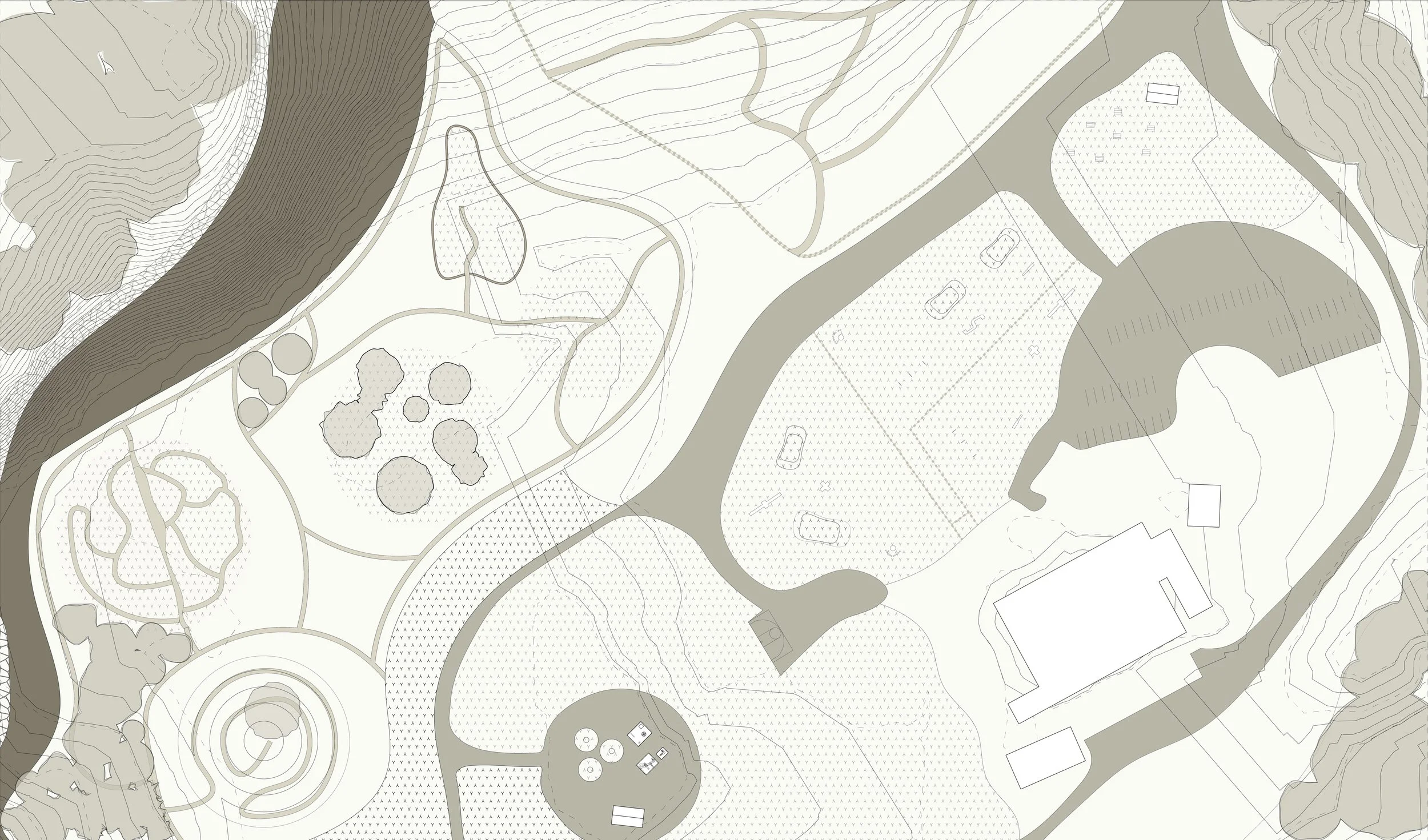

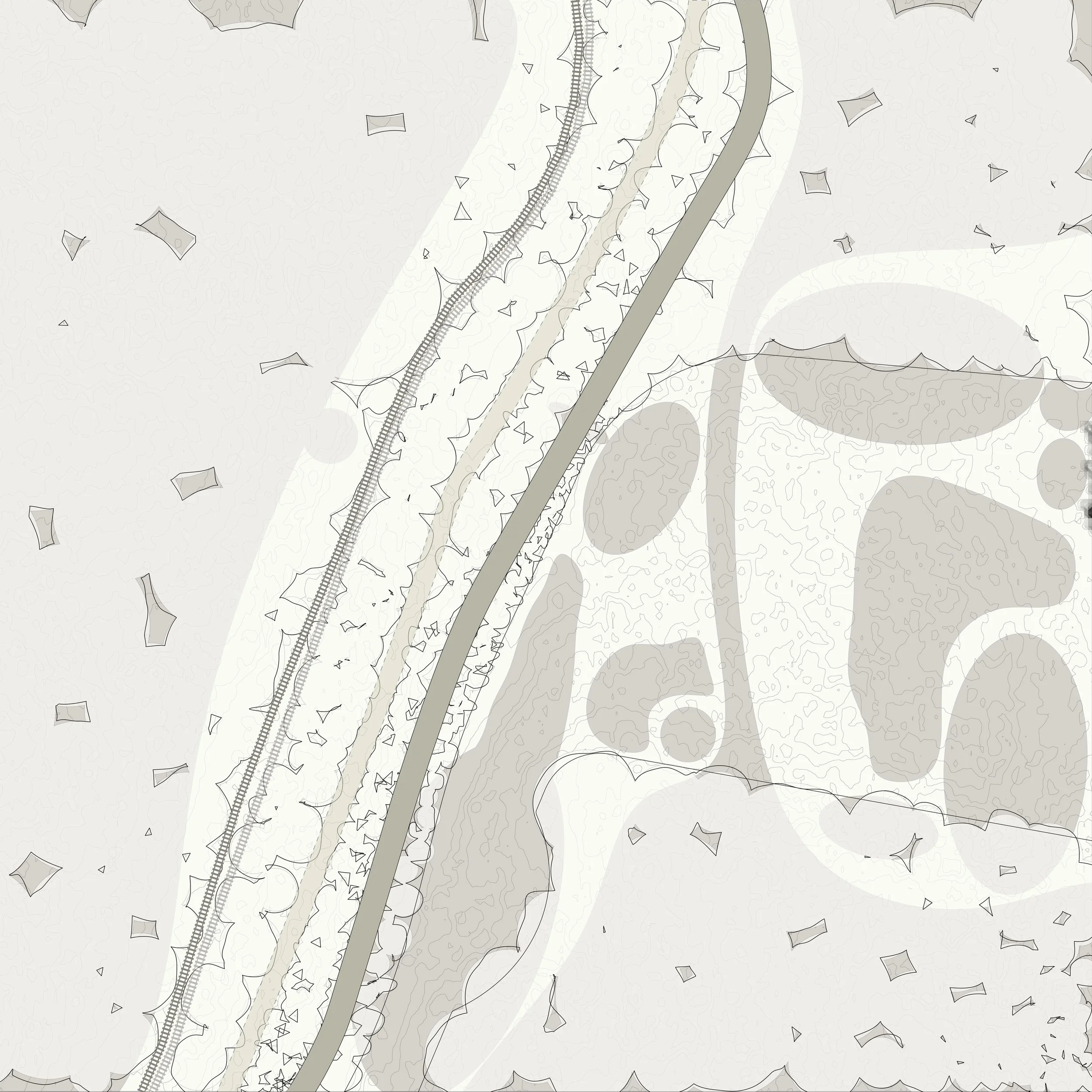
Site 3 - Dickenson County, Virginia
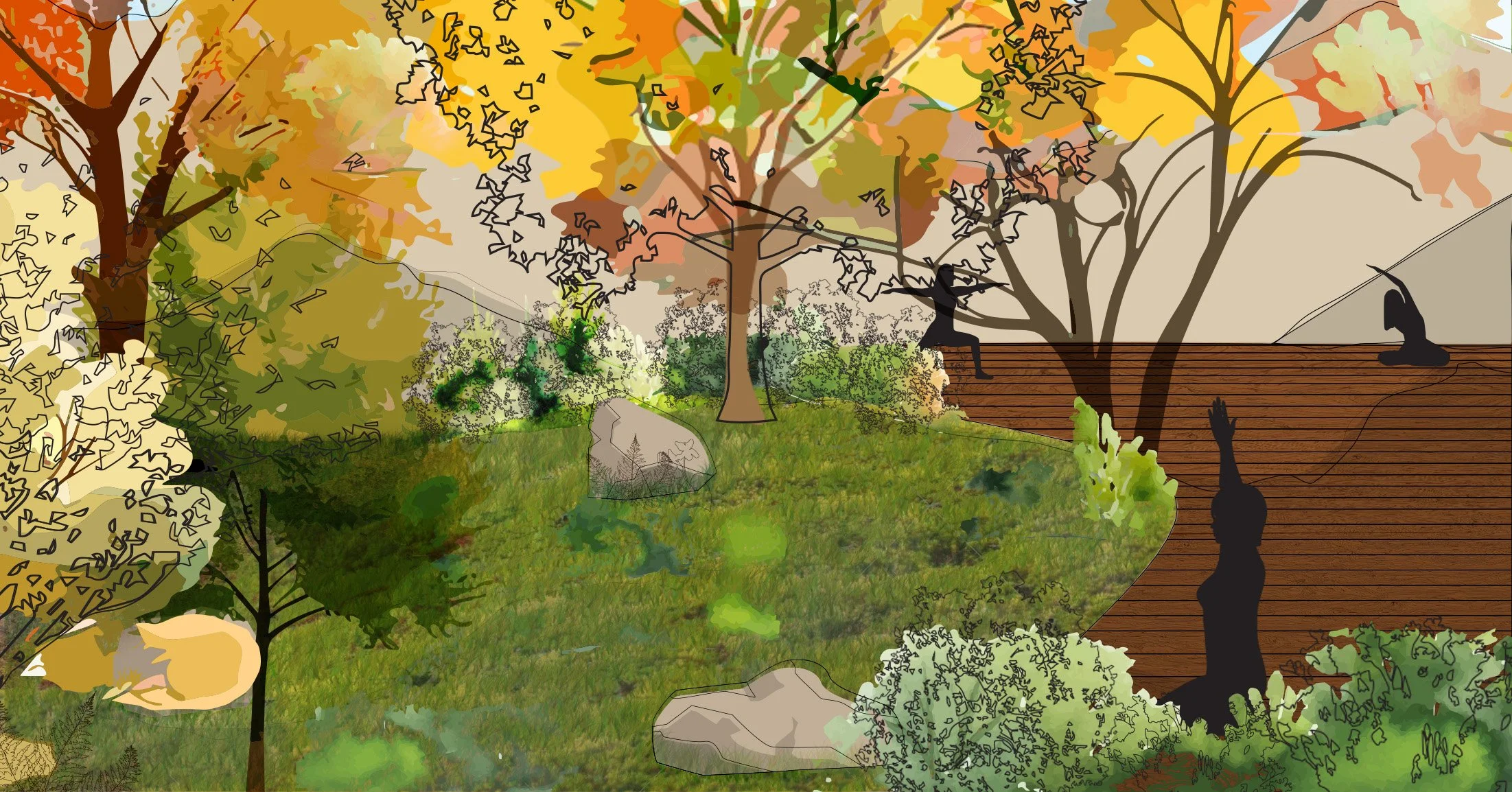
Site 1 Perspective - Central Planting Area
Site 2 Detailed Plan
Site 3 Perspective - Meditation Garden in Existing Forest
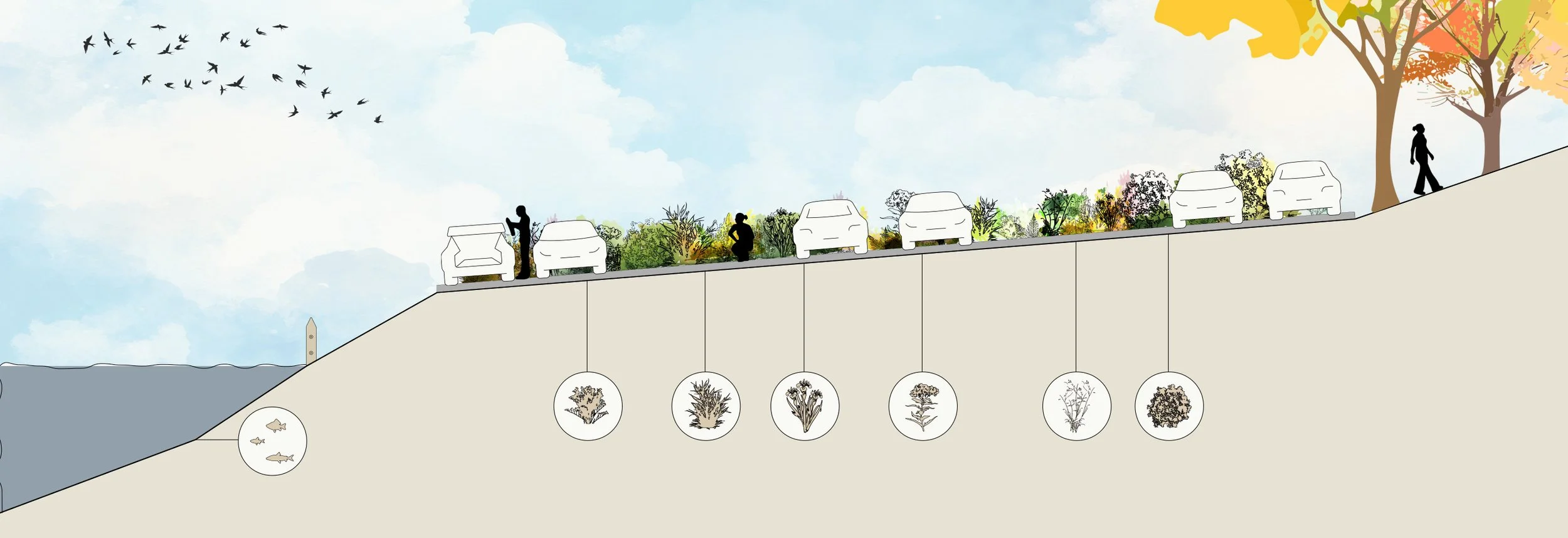
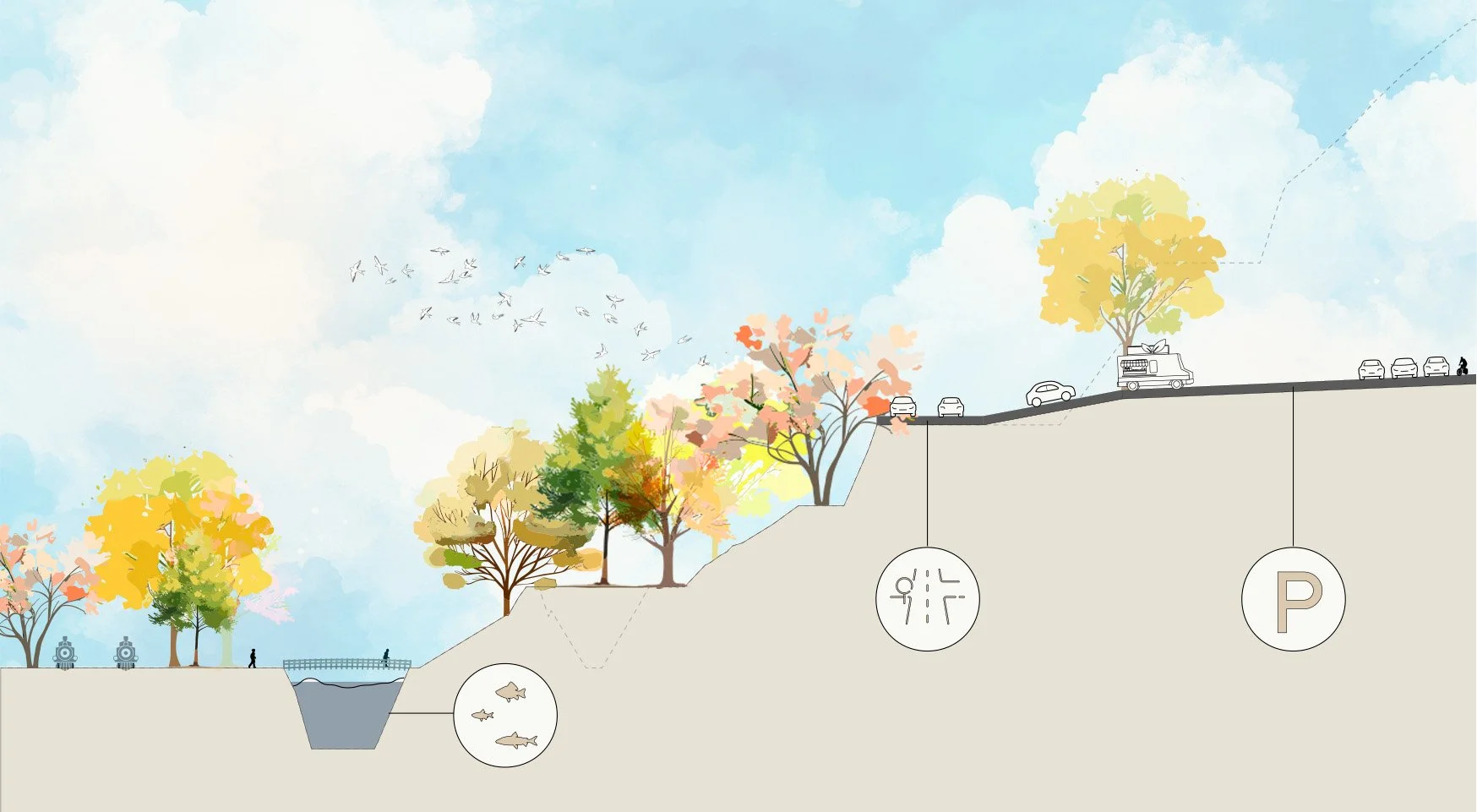
Site 1 Section
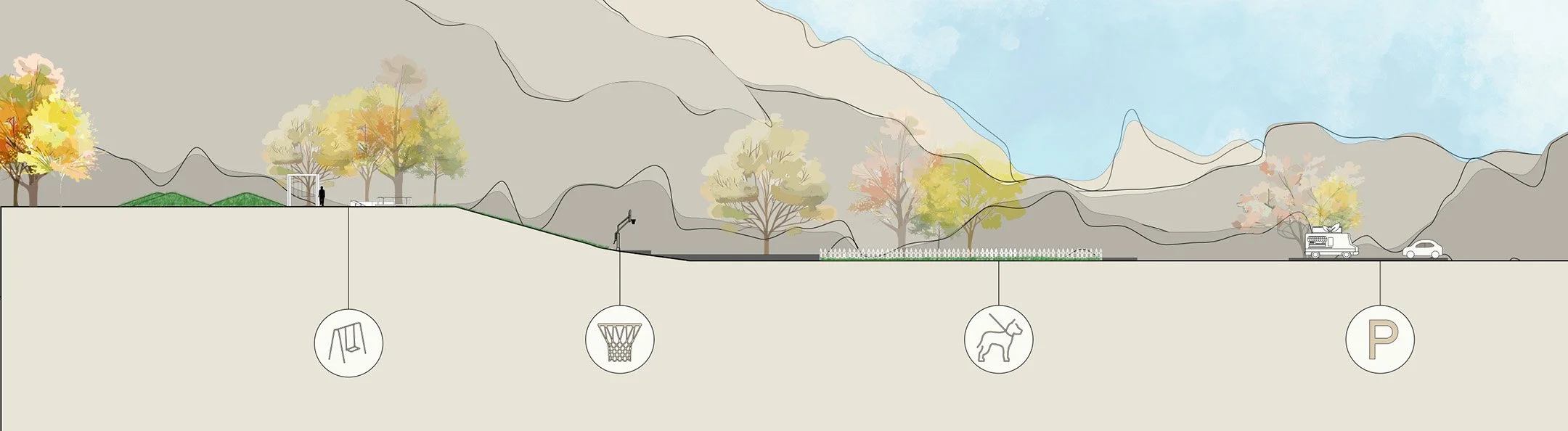
Site 2 Section
Site 2 Perspective - Sensory Garden
Site 3 Section